Hi everyone! Let’s talk money, Malaysian style. With the rising costs of nasi lemak, petrol, and just about everything else, managing our finances has never been more important. Did you know that between 2019 and 2022, our household spending grew about 3.7% annually while average income only grew a measly 2.4%? That gap means every Ringgit in your pocket really matters lah – especially with our current economic challenges post-pandemic.
To build a secure financial future (and keep your sanity intact!), let’s focus on five key areas: Income Management, Budgeting & Spending, Savings & Emergency Funds, Insurance & Risk Protection, and Investing & Wealth Building. I’ll walk you through each one, explain why it matters to us Malaysians right now, and share some real-life examples that might sound familiar.
1. Income Management

First things first – you need to know exactly what you’re working with, right? How much money actually lands in your bank account each month after all those deductions? Between EPF, SOCSO, PCB (monthly tax deductions), and now with i-Lestari withdrawals ending, your take-home pay can look quite different from your stated salary!
The national minimum wage is now RM1,700 (as of 2025), which, let’s be honest, with the current prices at Mydin and 99 Speedmart, barely covers basic needs for many of us. Even in smaller towns outside KL and Penang, this amount gets stretched thin. Sound familiar? Worry not, you’re not alone. Some Malaysians supplement their salary with side gigs, freelance work or rental income to bridge this gap. Others negotiate raises or promotions to keep up with inflation.
Try these approaches:
- Track your actual net income: List everything – your salary, bonuses, side gigs, and passive income, then subtract EPF/SOCSO and tax to see your true financial picture.
- Consider additional income streams: Got a talent or skill? Think about freelancing, weekend consulting, renting out that spare room, or jumping into the gig economy for extra cash flow.
- Invest in yourself: Use those tax reliefs for education and upskilling – it’s like getting a discount on becoming more valuable! Better credentials often lead to better pay.
Real-life example: Ali, a 30-year-old engineer at a factory in Pasir Gudang, brings home about RM4,000 after deductions from his RM5,000 salary. When he noticed rising prices at grocery shopping and petrol costs for his daily commute eating into his budget, he started weekend SPM Mathematics tutoring, earning an extra RM500 monthly. That buffer goes straight to his Maybank savings account and covers any budget shortfalls when unexpected bills arrive. Pretty smart, yes?
2. Budgeting & Spending

Let’s face it, Malaysians – without a budget, our money has a mysterious way of escaping our wallets! One minute it’s there after pay day, the next minute it’s gone after a weekend at the mall. A good budget isn’t about restricting yourself; it’s about giving every Ringgit a purpose.
Start by setting clear financial goals. Maybe you’re saving for a downpayment on that new apartment in Cyberjaya, dreaming of that family vacation to Port Dickson or Langkawi, or determined to clear your PTPTN loan once and for all. Write them down!
Then, get real about your expenses: housing, TNB and Air Selangor bills, groceries at Tesco/Lotus’s, Touch ‘n Go reload for your daily commute, CIMB or Maybank loan payments – the works. Many Malaysian banks like Maybank and CIMB now have budgeting features in their apps. Trust me, it prevents that mid-month “where did all my money go before Raya?” panic we’ve all experienced!
The 50/30/20 rule works well for many of the people I work with: about 50% of income to needs (rent, groceries, utilities), 30% to wants (that fancy coffee, movie nights), and 20% to savings or debt repayment. Of course, adjust these percentages to fit your unique situation.
Here’s your action plan:
- Compare income vs. expenses: Calculate your actual monthly take-home pay and list all regular expenses (loans, utilities, food, transport, subscriptions). Be brutally honest here!
- Apply a simple framework: Try allocating about 50% to essentials, 30% to lifestyle wants, and 20% to savings/debt repayment.
- Track where it all goes: Keep receipts or use an app to log purchases. Review those bank statements weekly – you might be surprised at what you find!
- Trim the fat: If you’re spending more than you earn, look for non-essentials to cut back. Could you cook more at home? Use public transport a few days a week? Small changes add up fast.
Did you know that a Bank Negara survey found 47% of households couldn’t raise RM1,000 for emergencies? Pretty scary, right? By treating savings as a non-negotiable expense (pay yourself first!), you can avoid debt and keep moving toward your goals.
Real-life example: Mei, a master’s student at UM in KL, was shocked to discover she was spending nearly RM600 monthly on mamak sessions, bubble tea at Tealive, and Grab Food deliveries to her apartment. By simply tracking her spending using the Money Lover app and cutting back to RM200 on treats (making her own teh tarik and only going to mamak twice a week instead of nearly every day), she freed up RM400 each month – half went to her dream travel fund for a Pulau Redang vacation and half to her CIMB savings account. She still enjoys her occasional roti canai and teh ais but now has money growing for her goals too! Pandai betul!
3. Savings & Emergency Funds
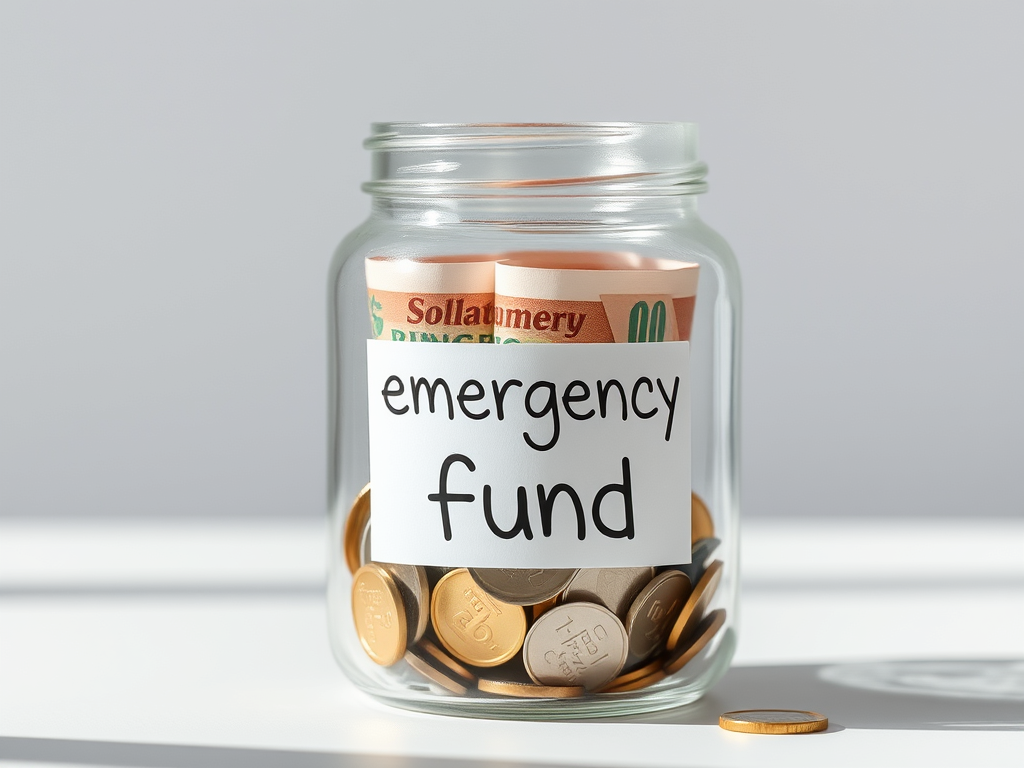
Let’s talk about that financial safety net we all need, especially in these uncertain times. Saving regularly is critical for both planned goals and sudden needs. Treat savings as a fixed “expense” each month.
Financial experts here in Malaysia recommend building an emergency fund equal to 3-6 months of your living expenses. Bank Negara Malaysia and AKPK (Agensi Kaunseling dan Pengurusan Kredit) have been stressing this point since the pandemic, and the EPF specifically suggests setting aside at least six months’ salary. This money should be easily accessible but separate from your main spending account – maybe in a high-yield savings account or conventional fixed deposit that can be broken in emergencies.
With nearly half of Malaysians lacking even RM1,000 in reserves (barely enough to cover a minor car repair at the mechanic!), starting your emergency fund is one of the most important moves you can make for your financial health.
Here’s how to build that crucial safety net:
- Make it automatic: Right after payday, transfer a set amount (aim for 10-20% of your salary) into a separate savings account. Treat this like any other bill you must pay.
- Choose the right accounts: Look for high-interest savings accounts or staggered fixed deposits to earn better returns while keeping your funds safe and accessible.
- Set a clear target: Aim for at least 3-6 months of expenses. If you spend RM3,000 monthly, work toward RM9,000-RM18,000 in your emergency fund.
- Adjust as life changes: Getting married? Having a baby? New house? As your responsibilities grow, your emergency fund should too.
Real-life example: Alexis, a 28-year-old teacher at a school in Seremban, watched several friends struggle with unexpected car repairs at the workshop and decided she didn’t want to be in that position. She set up an automatic RM500 monthly transfer to a dedicated BSN savings account right after her salary came in and built up RM6,000 (about 3 months of expenses) over a year. When her Honda City needed a RM1,200 repair after some flood damage, she handled it stress-free from her emergency fund instead of reaching for her Maybank credit card or borrowing from family. That peace of mind is priceless! And she slept well every night!
4. Insurance & Risk Protection

Let’s be honest, Malaysians – nobody likes thinking about worst-case scenarios, but that’s exactly why insurance matters. Between our monsoon floods, the occasional dengue outbreak, and everyday risks, sufficient coverage is crucial. It’s about protecting everything you’ve worked so hard to build.
Did you know only about 59% of Malaysians have any life insurance or takaful coverage? That means over 40% are completely exposed. Even more concerning, 48% of people with dependents have no life coverage, and 44% have no medical insurance beyond what their employers provide!
While our public healthcare system at government hospitals like Hospital Kuala Lumpur is technically free for citizens, we all know it may involve long waiting times. Having personal health insurance or medical cards can provide faster treatment. And if you have family depending on your income, term life insurance or investment-linked policies ensure they’ll be okay if something happens to you – no need to depend on financial assistance online.
Protection checklist:
- Review what you already have: List all current coverage (life, health, car, home). Make sure the sum assured is enough to cover your debts and family’s needs.
- Think about who depends on you: If you have family relying on your income, prioritize life and health insurance. For Islamic families, takaful plans or Hibah programs might be the preferred option.
- Shop around: Different insurers offer different rates – sometimes switching can save you significant money for the same coverage.
- Update after life milestones: Just got married? Had a baby? Started a business? These life changes usually mean higher financial risk, so adjust your coverage accordingly.
Real-life example: Mr. Lim, a 40-year-old father of two in Bayan Baru, Penang, thought he was covered by his employer’s group insurance policy from his tech company at Bayan Lepas. Then he had a minor stroke after too many late nights finishing projects and spent two weeks at Pantai Hospital facing enormous bills – nearing RM30,000! His minimal insurance covered very little, forcing him to withdraw from his fixed deposits and even some ASB savings. After recovering, Lim consulted with an agent and purchased a comprehensive life and medical card with higher coverage and added a critical illness rider that specifically covers stroke and heart attack (common among Malaysian men his age). Now he sleeps better knowing his wife and children won’t face financial hardship if something happens to him.
5. Investing & Wealth Building

Once you’ve got your income under control, budget on track, and emergency funds secure, it’s time for the fun part – wealth building! Investing helps your money work for you, beating inflation (which we know is a serious concern with current Malaysian food prices!) and growing over time.
The beauty of investing is that even small, consistent amounts can grow into impressive sums. Malaysians have found success with our local options: Bursa Malaysia stocks like Maybank and Public Bank, unit trusts through CIMB or Kenanga, and of course, the ever-popular Amanah Saham Nasional funds for those eligible. For instance, ASNB’s Amanah Saham Bumiputera (ASB) fund is government-backed with a 2024 dividend around 5.75%, and KWSP/EPF credited a nice 6.30% in 2024 – much better than keeping your money in a basic savings account at just 1-2%!
The key phrase here is – don’t put all your eggs in one basket! Consider mixing low-risk options (Malaysian Government Securities, fixed deposits at local banks) with higher-return possibilities (blue-chip stocks, property in emerging areas like Semenyih or Cyberjaya, or REITs listed on Bursa).
Start your wealth-building journey:
- Begin an investment plan: Set aside a portion of savings specifically for long-term growth. Even RM100-200 monthly can grow substantially over time thanks to the magic of compounding.
- Maximize retirement benefits: Take full advantage of EPF perks (like i-Invest in approved funds) or private retirement schemes (PRS) for additional growth.
- Spread your investments: Diversify across different asset types. Consider low-cost index funds/ETFs, a mix of ASNB funds, blue-chip shares on Bursa Malaysia, or even overseas market ETFs.
- Keep learning: Understand the risk level of each investment. If you’re just starting out, consider robo-advisors or chat with a licensed financial planner. And please, avoid those tempting “get rich quick” schemes – steady, informed growth is the way to go.
Real-life example: My friend Jeffrey from Melaka started putting just RM300 monthly into a Kenanga balanced unit trust fund at age 25 while working as an executive at a multinational company. He also topped up his EPF Account 1 consistently (beyond the mandatory 11%) and occasionally bought Sunway REIT units through his Rakuten Trade account for property exposure without the hassle of being a landlord. Now at 35, those investments have grown well beyond his contributions, giving him confidence that an early retirement in hometown is actually possible. The secret to his success? Starting early and staying consistent with his investments, even when the amounts seemed meagre.
Ready to take control of your monetary future? Download our Personal Finance Checklist for Malaysians (PDF) for a handy summary of action steps in each area. Your future self will thank you!


 The Mindful Money Path
Leave a comment